Back to Core Services Smart greenhouse and agricultural IoT

Smart greenhouse control systems

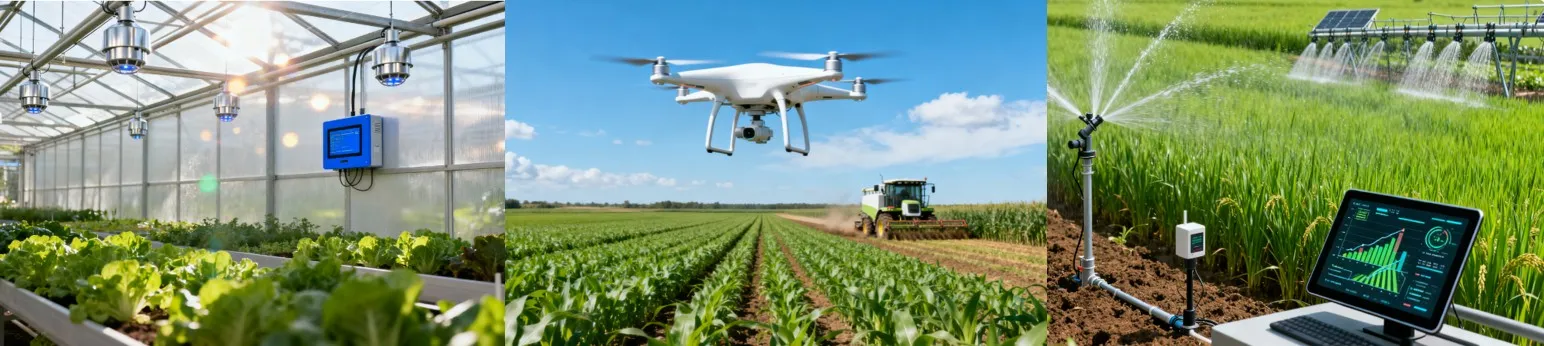
Connect greenhouse sensors, environmental controls, and irrigation to an operator interface for reviewing records and adjusting settings.

Completed Greenhouse Controls and Irrigation Pilot at an Organic Farm

Four greenhouses received controls and irrigation systems and passed acceptance testing. The grant project recorded a reduction of 0.8108 metric tons CO₂e. A pilot lets staff learn operation before discussing other zones.

Smart Agriculture Control

Smart Agriculture Control

  • Microclimate Precision Monitoring

    Review zone temperature, humidity, light, or soil readings alongside equipment status to track environmental changes.

    Zone environmental records
  • Control rules and alerts

    Use configured thresholds for irrigation, ventilation, shading, or lighting. Farm staff can operate devices manually and receive exception alerts.

  • Crop conditions and parameter changes

    Set lighting, irrigation, and environmental parameters for different crops and growth stages, with operating and adjustment records.

FAQ

Smart Agriculture FAQ

Implementation conditions for greenhouse controls, IoT sensing, and automated irrigation

What size of farm is the smart agriculture system suitable for?

Start with a zone pilot, then consider other areas. One organic farm started with controls and irrigation in four greenhouses. Share zones, crops, and equipment to discuss a suitable pilot.

Do I need a technical background to operate the system after installation?

Daily operation comes with instructions and training. Staff can use the project’s phone or computer interface to review data, adjust settings, and operate manually. Handover also covers maintenance and exceptions.

How durable are IoT sensors in agricultural environments (high heat, high humidity)?

Sensors need temperature, humidity, water, and dust protection suited to the site. Proposals specify environmental ratings, installation, and maintenance. Share greenhouse photos and cleaning or spraying routines to support selection.

Can an AI irrigation system really save labor?

Automatic irrigation can handle repetitive scheduled or rule-based tasks. Farm staff still inspect crops and respond to exceptions. Before-and-after records of operating time and water use help assess changes.

What protective measures does the smart agriculture system have for typhoons or power outages?

Plans can include manual takeover, safe device states, and exception alerts. Backup power requires compatible equipment. Operating instructions cover securing devices before storms, outage handling, and checks after power returns.

Can this system be customized according to the different crops I grow?

Yes, settings can vary by crop, growth stage, and zone, with manual-adjustment and version records. Farm experience and site tests establish thresholds for seasonal adjustments.

Is it cost-effective for small-scale farms to implement smart technology? Are there government subsidies?

Start with a pilot for environmental sensing and irrigation control. Costs depend on sensing coverage and control equipment, with construction and platform licensing itemized. Reusing existing pipes and electrical distribution affects construction costs. Agriculture and Food Agency support for facility environmental control generally covers up to half the equipment cost, capped at NT$150,000 per set. Normally, each project receives support for one set. Greenhouses or net houses of at least 0.5 hectares may receive approval for additional sets. Applications follow the current announcement, with equipment specifications and quotations prepared to meet program requirements.

My farm is in a remote area with poor cell signal; can I still use the smart system?

Yes, wired or LoRa links can connect site devices with local controls. Remote viewing still needs a working uplink. Share the location and device layout to arrange communications tests.

Plan smart agriculture around your site conditions

Share your crop, site, and current management needs to discuss a practical system direction.

Discuss smart agriculture

Projects and implementation scenarios